
Oil is a hydrocarbon
liquid substance that is greasy to the touch and is formed by natural resources
or the breakdown of fats. Oil comes in many forms as diverse as crude oil and
vegetable oil, which serve very different purposes. Products consisting of oil
are insoluble when added to water, but will dissolve in organic substances such
as those acquired from living organisms.
In
search of oil and gas needed an exploration. Exploration is an activity search
and find hydrocarbon resources and estimate the hydrocarbon potential in a
basin. But to make an exploration of the need for a system. This system is
called the Basic Petroleum System is the process of finding hydrocarbon content
below the surface. In Basic Petroleum System are critical components that must
be present. The components are:
1.
Source Rock
2.
Reservoir Rock
3.
Migration
4.
Trap
5.
Seal/Cap Rock
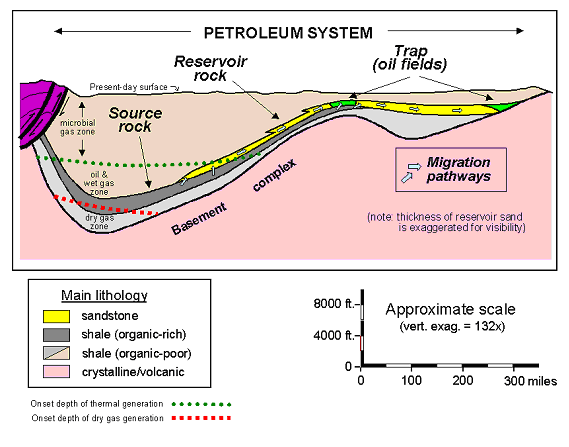
1 1.Source
Rock
Are sediments containing organic
materials sufficient to produce oil and gas when the sediment is buried and
heated, and can produce the oil and natural gas in economic quantities. Organic
materials contained called karogen. Karogen has 4 types namely:
• Type 1
Algae from Lacustrine deposition environment and lagoon. This type can
produce oil with good quality and able to produce gas.
• Type 2
A mixture of plants and marine microorganisms. This type is the main
ingredient of oil and gas.
• Type 3
Land plants in sediments containing coal. This type generally produces
gas and
a small amount of oil.
• Type 4
Materials plant material is oxidized. This type is not able to produce
oil and
gas.
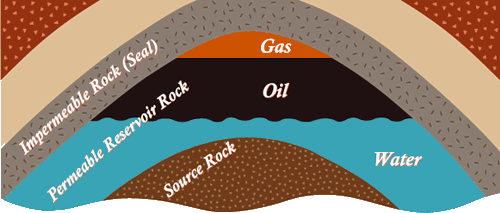
2. Reservoir Rock
Rocks that are capable of storing and capable of flowing
hydrocarbons. Reservoir rock is where hydrocarbons accumulate. Where the rock
must have porosity as a hydrocarbon storage and permeability as where the flow
of hydrocarbons. Types of Reservoir are:
• Siliclastic rock
• Carbonate Rock
• Igneous Rock (Rock Frozen)
• Metamorphic Rock
3. Migration
The
process of oil and gas transportation from the source rock to the reservoir. Transportation of hydrocarbons occur in some processes, namely:
- Primer Migration = Migration in sequence of Source Rock
-
Ekspulsion = From
sequence to the carrier bed Source Rock
- Secondary Migration = Transport
carrier bed leading to the trap

4. Trap
The shape of a geometry or facies are able to hold oil
and gas to gather and not move again. A trap should consist of rock hydrocarbon
reservoir as a storage place and a set of seals as a cover to prevent the
migration again.
The process of migration and trap formation are not
interconnected and occur at different times. Trap formation time is very
important because if the hydrocarbon trap formed before migrating it would
likely ditemukanya hydrocarbon accumulation in the trap. And otherwise the
possibility of hydrocarbons have been passed through the trap. The type of trap
that is:
• Structural Traps
Entrapment is affected by the occurrence of deformation
to the bedding with the
formation of folds and faults structures is a response
to tectonic events and the most
original trap and trap the most important.
• Entrapment Stratigraphy
Trap is affected by variations perlapisan vertically and
laterally, rock facies changes and
disharmony and lateral variations in
reservoir lithology on a layer in the transfer of oil.
• Trap Combination
The combination of structural and stratigraphic. Where
in the trap of this type is a factor
in limiting the movement along or trapping
petroleum.

5. Seal Rock
Seal rock is rock baffle system that is not permeable
like claystone / mudstone, anhydrite and salt.

Tidak ada komentar:
Posting Komentar